

Ever thought about what keeps our satellite dishes aimed just right or how Mars rovers navigate the rocky Martian landscape? Space technology is no longer just a sci-fi fantasy: it’s very much a part of our reality. From the communication satellites orbiting Earth to the probing devices collecting data on distant planets, these advancements are redefining the boundaries of human exploration. Buckle up, because we’re about to blast off into some of the most groundbreaking examples of space technology that showcase human ingenuity in its truest form.
Satellite Technology
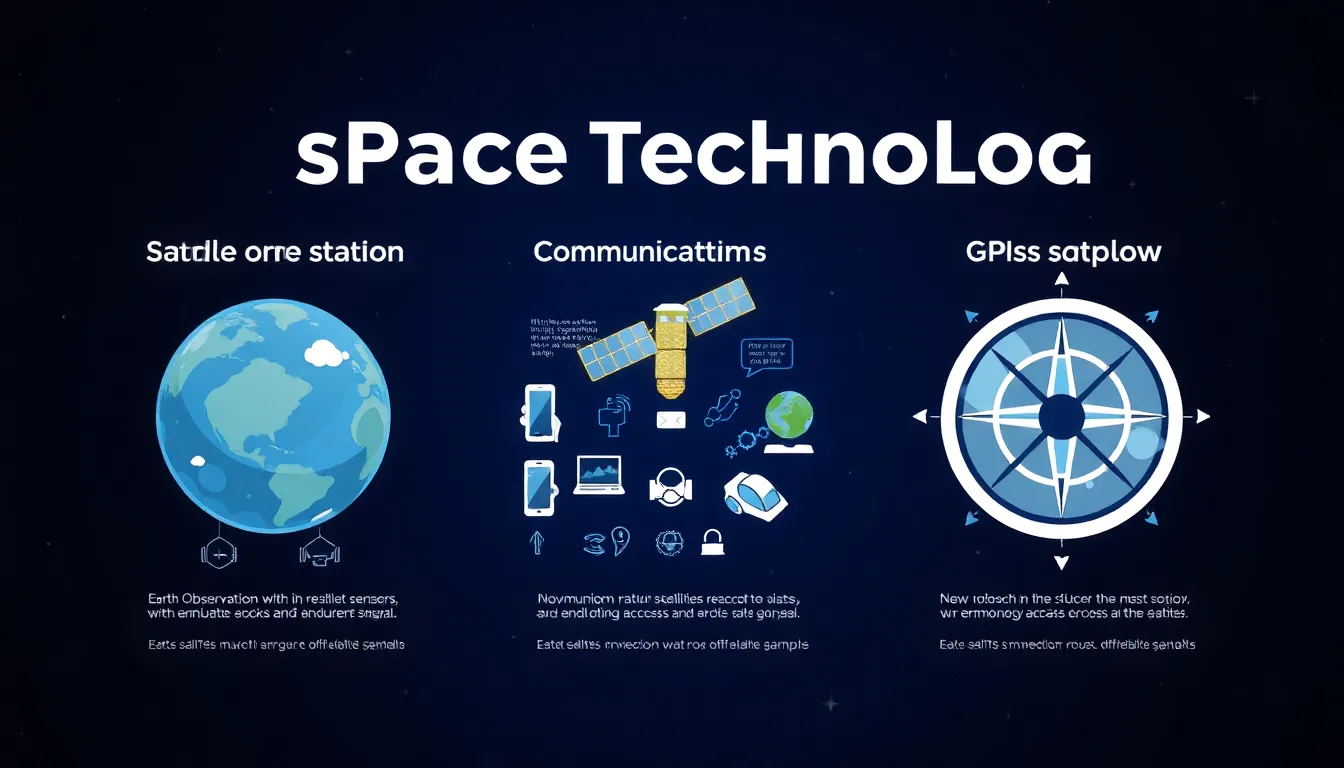
Satellites are the unsung heroes of space technology, quietly orbiting Earth and performing a myriad of crucial functions that keep our world connected and informed. They come in various shapes and sizes, each designed to meet specific needs.
Earth Observation Satellites
These technological marvels are like the watchful eyes of the planet. Equipped with advanced sensors and cameras, Earth observation satellites monitor climate change, urban development, and natural disasters. Whether it’s tracking deforestation or assessing crop health, these satellites provide data that informs policymakers and scientists in making critical decisions.
Communication Satellites
Ever texted someone, watched a live stream, or called up your buddy overseas? Chances are, communication satellites had a hand (or an antenna) in making it possible. They operate by receiving signals from the ground, relaying them back to the intended recipient, ensuring we remain connected across vast distances. This technology is essential in both everyday life and in managing global communication networks.
Navigation Satellites
Let’s not forget about the GPS satellites that guide us when we take road trips or navigate unusual cityscapes. These satellites communicate with devices on Earth to provide precise location data, allowing everything from ride-sharing services to emergency responders to function seamlessly. They are critical in establishing a sense of direction in our chaotic world.
Space Exploration Technologies
The journey into the unknown of space has only been made possible through advancements in exploration technologies, allowing humanity to set its sights beyond our blue planet.
Rovers and Landers
Think of rovers and landers as the explorers of space, trekking on foreign terrains to gather essential data. NASA’s Perseverance rover, for instance, is equipped with sophisticated instruments that can analyze the Martian soil, hunt for signs of ancient life, and even produce oxygen from the planet’s carbon dioxide-rich atmosphere. It’s like sending a high-tech Swiss Army knife on a road trip.
Orbiters and Probes
In the world of space exploration, orbiters and probes take on a grander role. They provide a bird’s-eye view of the cosmos and help us understand celestial phenomena. The Hubble Space Telescope, for example, has transformed our understanding of the universe, capturing breathtaking images of distant galaxies and even identifying exoplanets. These tools act as our stargazing companions in the vast expanse of space.
Human Spaceflight Technologies
For humans to venture into space, technology must rise to the occasion, ensuring safety and sustainability during missions.
Spacecraft Design and Engineering
Crafting a vessel capable of withstanding the harsh environment of space is no small feat. Spacecraft design integrates cutting-edge engineering with materials that protect astronauts from extreme temperatures, radiation, and micrometeoroid impacts. Recent designs, like NASA’s Orion spacecraft, highlight the emphasis on durability and functionality, providing a safe haven for astronauts as they travel beyond low Earth orbit.
Life Support Systems
Imagine being in a canister hurtling through space with no way to breathe or hydrate. Life support systems are the technology’s answer to this predicament. They regulate the essential needs of astronauts, oxygen, temperature, and food, while processing waste efficiently. Notably, the International Space Station has sophisticated life support systems that recycle air and water, enabling long-duration missions.
Robotic Assistance in Space
As missions become increasingly ambitious, robots are taking on vital roles, assisting both in maintenance and exploration activities.
Automated Systems for Repairs
Robots, programmed for precision and efficiency, have begun to play a crucial role in repairing spacecraft and satellites. NASA’s Robotic Work Station allows crew members aboard the ISS to control robotic arms remotely, enabling them to conduct repairs that would be risky for humans to undertake.
Robotic Arms and Mobility Aids
On the ISS, robotic arms perform tasks ranging from moving equipment to conducting experiments. These aids not only reduce the workload of astronauts but significantly enhance the operational capabilities of human crews in space. Innovations, such as the Canadian-built Canadarm2, illustrate the potential of robotics in making space missions safer and more effective.
Emerging Trends in Space Technology
The landscape of space technology is rapidly changing, with new ideas and innovations pushing boundaries every day.
Space Mining
What if I told you that the next gold rush might be in space? Companies are researching methods for mining asteroids and celestial bodies for their rich deposits of metals and minerals. This emerging trend could provide necessary resources for future space missions, making the idea of living and working in space a lot more feasible.
Reusable Launch Systems
SpaceX popularized the idea of reusable rockets, fundamentally altering how the industry views cost and efficiency. By allowing rockets to be refurbished and reused, launching payloads into orbit is becoming more affordable. This innovation not only lowers costs but also enhances the sustainability of space exploration efforts.


